
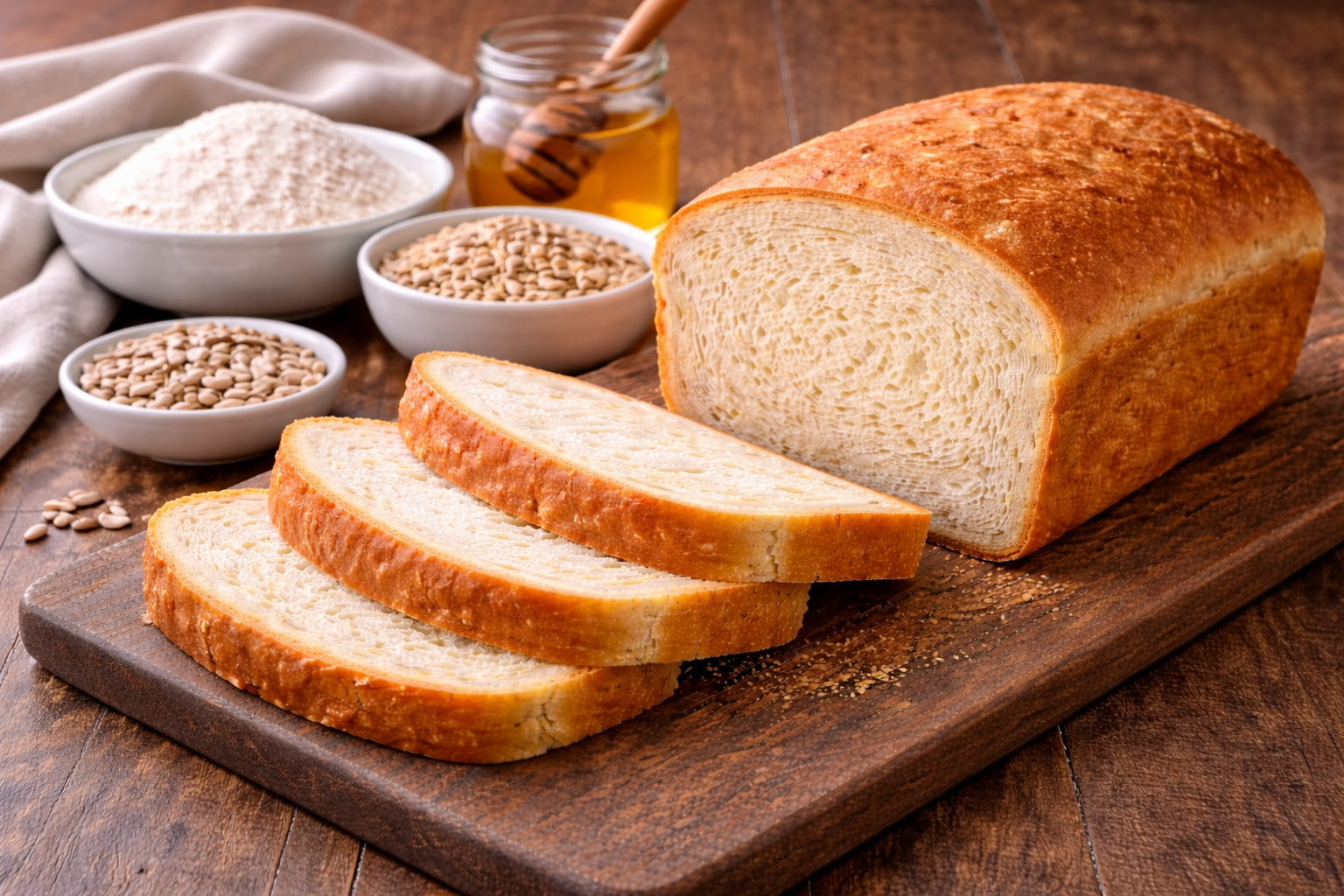
Gluten-free bread is a type of bread made without gluten, a protein found in wheat, barley, and rye. This bread is prepared using alternative flours and ingredients that do not contain gluten. Gluten-free bread has become more common in recent years and is now widely available in supermarkets and bakeries.
Traditionally, bread relies on gluten to create structure and elasticity. Without it, gluten-free bread requires different ingredients and preparation methods. As a result, its texture and appearance can differ from regular bread. It may be softer, denser, or more crumbly depending on the recipe.
Gluten-free bread is used in everyday meals in the same way as standard bread. It can be eaten fresh, toasted, or used for sandwiches. This article explains what gluten-free bread is, common ingredients, a simple recipe, preparation steps, daily uses, and interesting facts, all written in clear and easy language.
What Is Gluten-Free Bread?
Gluten-free bread is bread that does not include wheat, barley, or rye. Instead, it uses flours made from rice, corn, oats, or other gluten-free grains. These flours do not behave the same way as wheat flour, so additional ingredients are often needed.
Because gluten is missing, gluten-free bread usually relies on binding agents such as eggs or plant-based gums. These help hold the dough together during baking. The final bread may have a different crumb structure and lighter rise.
Gluten-free bread can be baked as loaves, rolls, or slices.
Common Ingredients in Gluten-Free Bread
Gluten-free bread uses a variety of ingredients to replace traditional wheat flour. A basic recipe often includes:
- Gluten-free flour blend
- Rice flour or corn flour
- Water or milk
- Yeast
- Salt
- Oil or butter
- Binding agents (such as xanthan gum)
These ingredients work together to create structure and moisture. Many gluten-free flour blends are pre-mixed to improve consistency.
Simple Gluten-Free Bread Recipe
Ingredients
- 3 cups gluten-free flour blend
- 1 cup warm water or milk
- 1 tablespoon dry yeast
- 1 teaspoon salt
- 2 tablespoons oil
- 1 teaspoon sugar
- 1 teaspoon binding agent
Preparation Method
- Mix warm liquid, yeast, and sugar. Rest for 10 minutes.
- Add flour, salt, oil, and binding agent. Mix well.
- Stir until a thick batter forms.
- Place the mixture into a baking pan.
- Let it rest for 30–40 minutes.
- Bake at 180°C (350°F) for 40 minutes.
- Cool fully before slicing.
How Gluten-Free Bread Is Used in Daily Meals
Gluten-free bread is used in the same way as regular bread. It is commonly eaten for breakfast as toast or with spreads. During lunch, it can be used for sandwiches or served alongside soups and salads.
The bread can also be toasted to improve texture. Because it may dry out faster, gluten-free bread is often stored carefully or frozen for later use. It can be sliced and reheated when needed.
Many households use gluten-free bread as a regular substitute for traditional bread.
Interesting Facts About Gluten-Free Bread
- Gluten-free bread uses multiple flour types.
- Texture depends on the flour blend used.
- It often contains binding agents.
- Storage affects freshness more than regular bread.
- Recipes vary widely by region.
These facts explain why gluten-free bread can differ from one recipe to another.
Gluten-free bread is an alternative type of bread made without wheat, barley, or rye. It uses different flours and ingredients to replace gluten and create structure. Because of this, its texture and baking process differ from traditional bread.
The preparation of gluten-free bread is straightforward, although it requires specific ingredients. It can be baked at home or purchased ready-made. Gluten-free bread fits easily into daily meals and can be served in many of the same ways as standard bread.
With growing availability and varied recipes, gluten-free bread has become a familiar option in many kitchens. Its flexible use, simple preparation methods, and adaptability explain why it continues to be widely used as an alternative bread choice.
Find more Bread Types through the links: Hawaiian Bread, Italian Ciabatta.