
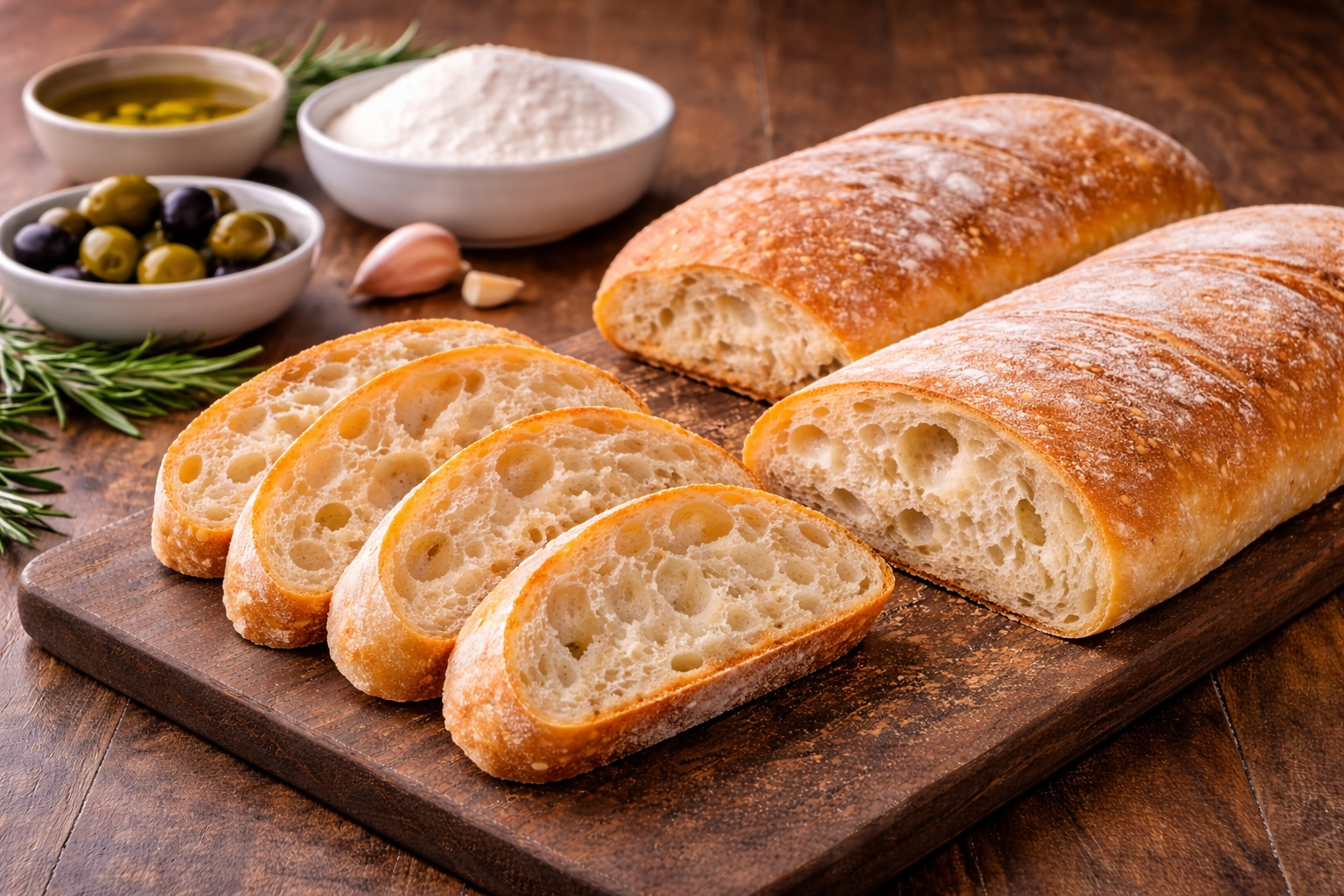
Italian ciabatta is a traditional bread that originated in Italy and is known for its flat shape, crisp crust, and airy interior. The word ciabatta means “slipper” in Italian, which describes the bread’s long and slightly flattened form. This bread became popular in the late 20th century and is now widely used around the world.
Ciabatta is made using a high-hydration dough, which gives it large air pockets inside and a light texture. Despite its simple ingredients, the preparation process requires time and careful handling. Ciabatta is commonly served with meals, used for sandwiches, or paired with olive oil.
This bread is valued for its rustic appearance and versatility. It can be eaten fresh, toasted, or grilled. In this article, you will learn what Italian ciabatta is, how it is made, its ingredients, a simple recipe, daily uses, and interesting facts, all explained in clear and simple language.
What Is Italian Ciabatta?
Italian ciabatta is a yeast-leavened bread made primarily from wheat flour, water, yeast, and salt. What makes it different from many other breads is its very wet dough. This creates a loose structure with large holes inside the bread.
The crust of ciabatta is usually thin and slightly crisp, while the inside remains soft and open. The bread is often baked free-form, which gives it a rustic look. Ciabatta is known for absorbing flavors well, making it suitable for many dishes.
It is commonly associated with Italian cuisine and traditional baking methods.
Common Ingredients in Ciabatta Bread
Ciabatta bread is made using a small number of basic ingredients. A standard recipe usually includes:
- Wheat flour
- Water
- Yeast
- Salt
- Olive oil (optional)
Some recipes use a pre-ferment to improve texture. The high amount of water in the dough is key to achieving the bread’s open crumb. Despite the simple ingredient list, proper mixing and resting time are important.
Simple Italian Ciabatta Recipe
Ingredients
- 3 cups wheat flour
- 1½ cups warm water
- 1 teaspoon dry yeast
- 1 teaspoon salt
- 1 tablespoon olive oil
Preparation Method
- Mix water and yeast in a bowl. Rest for 5 minutes.
- Add flour, salt, and olive oil. Mix into a sticky dough.
- Cover and let the dough rest for 1 hour.
- Gently fold the dough without kneading.
- Shape lightly and place on a baking tray.
- Bake at 220°C (425°F) for 25–30 minutes.
- Cool before slicing.
How Ciabatta Is Used in Daily Meals
Italian ciabatta is widely used in everyday meals. It is especially popular for sandwiches because its structure holds fillings well. Ciabatta is often used for panini, filled with vegetables, cheese, or meat.
It is also served alongside soups, salads, or pasta dishes. Many people enjoy dipping ciabatta into olive oil or sauces. Toasted ciabatta slices are commonly used for open sandwiches or simple snacks.
Because of its airy interior, ciabatta absorbs flavors easily.
Interesting Facts About Ciabatta
- Ciabatta was developed in Italy in the 1980s.
- The dough contains more water than most breads.
- Its shape is intentionally uneven.
- Ciabatta is baked without heavy shaping.
- It is used in many Italian sandwich styles.
These facts explain why ciabatta looks and feels different from other breads.
Italian ciabatta is a classic bread known for its rustic shape, airy interior, and simple ingredients. Although it looks plain, its preparation process requires careful handling and time. The high-hydration dough gives ciabatta its distinctive texture and open crumb.
This bread fits easily into daily meals and is commonly used for sandwiches, side dishes, and light snacks. It can be eaten fresh or toasted and pairs well with many foods. Ciabatta can be baked at home or purchased from bakeries.
Because of its versatility and connection to Italian baking traditions, ciabatta remains a popular bread choice worldwide. Its simple composition, practical use, and recognizable appearance explain why it continues to be widely enjoyed in both traditional and modern kitchens.
Find more Bread Types through the links: Gluten-Free Bread, Hawaiian Bread.