
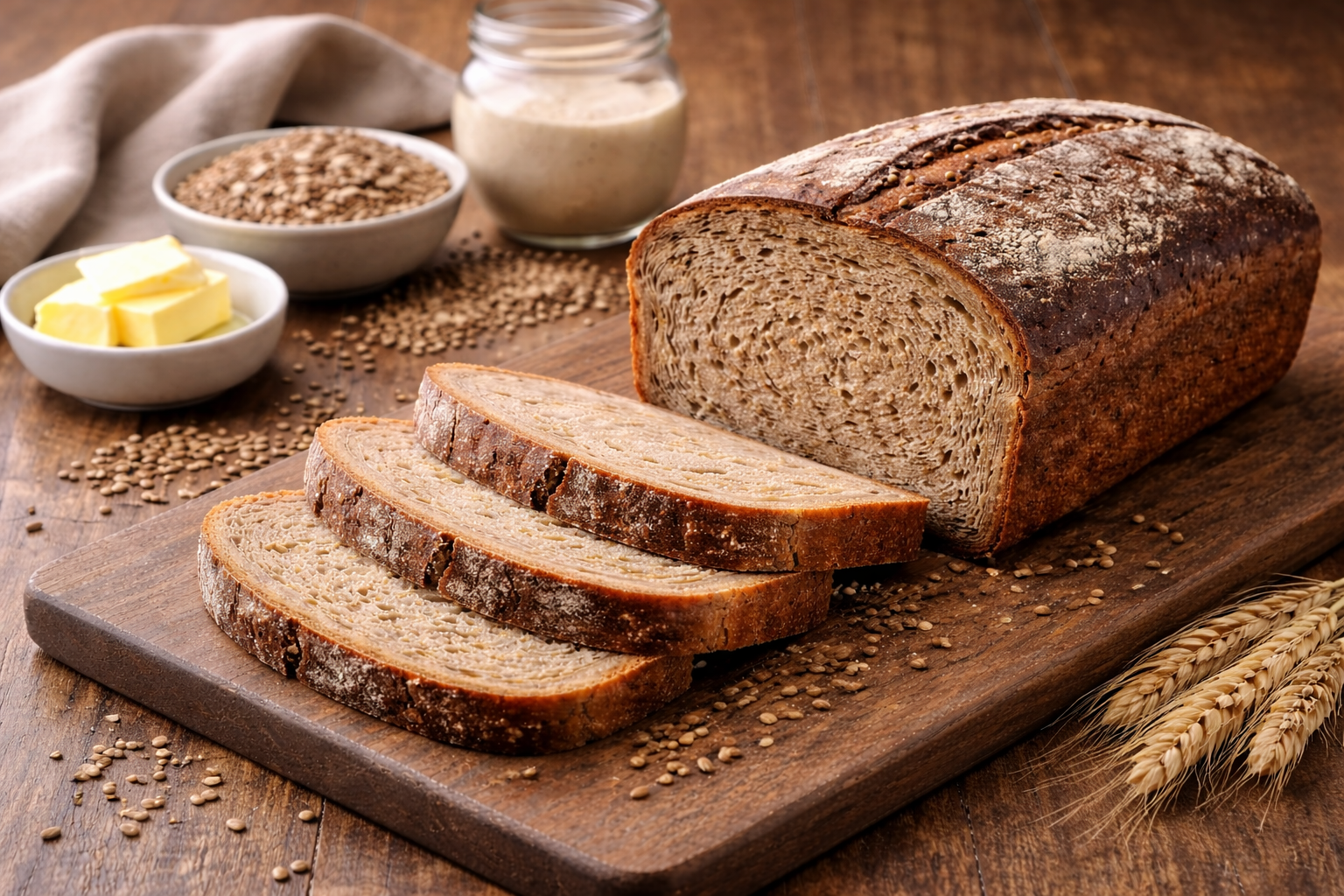
Rye bread is a traditional type of bread made mainly from rye grain. It has been baked and eaten for centuries, especially in Northern and Eastern Europe. Compared to wheat-based bread, rye bread usually has a darker color, firmer texture, and richer aroma. Its appearance and taste depend on how much rye flour is used and how it is prepared.
Rye bread became popular in regions where rye grew better than wheat due to colder climates. Over time, it became an important part of everyday meals. Today, rye bread is available in many forms, from light rye loaves to dense, dark varieties.
This bread is commonly eaten with breakfast, lunch, or dinner. It can be sliced thin, toasted, or served with soups and spreads. This article explains what rye bread is, how it is made, common ingredients, simple preparation steps, and interesting facts in a clear and easy-to-read way.
What Is Rye Bread?
Rye bread is made using rye flour, either alone or mixed with wheat flour. Rye flour comes from rye grain, which is different from wheat in structure and baking behavior. Because of this, rye bread often feels denser and more moist than wheat bread.
The color of rye bread can range from light brown to very dark, depending on the flour type. Some versions also include seeds or grains for texture. Rye bread usually has a tighter crumb, meaning fewer air holes inside.
Its structure makes it suitable for thin slices and sturdy toppings.
Common Ingredients Used in Rye Bread
Rye bread is prepared with simple ingredients. A basic recipe usually includes:
- Rye flour
- Wheat flour (optional)
- Water
- Yeast or sourdough starter
- Salt
- Sugar or molasses (optional)
Some recipes also include caraway seeds, which are commonly associated with rye bread. The exact ingredients depend on regional traditions and baking methods.
The combination of these ingredients creates the bread’s characteristic texture and color.
Simple Rye Bread Recipe
Ingredients
- 2 cups rye flour
- 1 cup wheat flour
- 1¼ cups warm water
- 1 tablespoon dry yeast
- 1 teaspoon salt
- 1 tablespoon sugar or molasses
- 1 tablespoon oil
Preparation Method
- Mix warm water, yeast, and sugar in a bowl. Rest for 10 minutes.
- Add rye flour, wheat flour, salt, and oil. Mix well.
- Knead lightly until combined.
- Cover and let the dough rise for 1 hour.
- Place dough in a baking pan.
- Bake at 180°C (350°F) for 40 minutes.
- Cool completely before slicing.
How Rye Bread Is Used in Daily Meals
Rye bread is widely used in everyday meals. It is often served with breakfast alongside butter, cheese, or eggs. For lunch, it is commonly used in sandwiches with vegetables, meat, or fish. At dinner, rye bread is frequently paired with soups or stews.
Because of its firm texture, rye bread holds toppings well and does not crumble easily. It can be eaten fresh or toasted. Thin slicing is common, especially for open sandwiches.
Many cultures include rye bread as a regular table bread due to its practical use and long history.
Interesting Facts About Rye Bread
- Rye grows well in colder climates.
- Rye bread was common before white bread became popular.
- Some rye breads use sourdough instead of yeast.
- The darker color often comes from molasses or malt.
- Rye bread stays moist longer than many wheat breads.
These facts show why rye bread has remained important in many regions.
Rye bread is a traditional and widely recognized type of bread with a long history. Made mainly from rye flour, it has a darker appearance and denser texture compared to many wheat-based breads. Its ingredients are simple, and the preparation process follows basic baking steps.
Rye bread fits easily into daily meals and can be served in many ways. It works well for breakfast, lunch, and dinner, and pairs easily with both simple and hearty foods. The bread can be baked at home or purchased ready-made from bakeries.
Because of its strong connection to regional traditions and practical use, rye bread continues to be a familiar food in many households. Its straightforward preparation, solid structure, and cultural background explain why it remains a common choice across different countries and cuisines.
Find more Bread Types through the links: Multigrain Bread, Whole Wheat Bread.